The 2026 Property Manager’s Guide to Eviction Cleanouts in Metro Atlanta
Introduction: The Post-Writ Reality
In 2026, the Georgia rental market is more fast-paced than ever. For property owners in Atlanta, Alpharetta, Avondale Estates, and Berkeley Lake, the moment a Writ of Possession is executed, the clock starts ticking. Every day a unit sits full of abandoned property is a day of lost revenue.
This guide outlines the legal responsibilities of landlords regarding abandoned items and provides a strategic framework for turning over units quickly, safely, and in compliance with municipal codes.
Part 1: Navigating Georgia’s 2026 Eviction Laws
While the core of Georgia’s dispossessory laws remains focused on O.C.G.A. § 44-7-55, recent updates in 2026 have tightened the “habitability” standards.
The Writ of Possession
Once a judge issues the Writ of Possession, the tenant has 7 days to vacate voluntarily. After that, the Marshal (in Atlanta/Fulton) or Sheriff (in DeKalb/Gwinnett) executes the lockout.
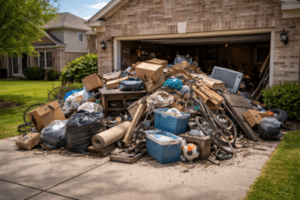
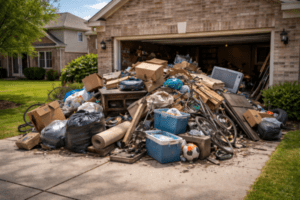
- The “Curb” Rule: Traditionally, property was moved to the right-of-way. However, in 2026, many Metro Atlanta municipalities—especially Avondale Estates and Berkeley Lake—have stricter “Blight and Nuisance” ordinances that penalize landlords if property is left on the curb for more than 24 hours.
Abandoned Property vs. Trash
Landlords must distinguish between what is clearly “junk” and what may be “abandoned property.”
- Items under $500: Under current guidance, items clearly worth less than $500 can often be disposed of after 10 days of notice.
- High-Value Items: For items exceeding $500, property managers should consult their legal counsel regarding public sales to avoid “wrongful conversion” lawsuits.
Part 2: Municipal Deep-Dive: Atlanta to Berkeley Lake
1. The Atlanta Core: High-Volume Challenges
In the City of Atlanta, the sheer volume of evictions means Marshals are on tight schedules.
- Action Item: Ensure your cleanout crew is on-site the moment the lockout is completed. Delaying even 4 hours can lead to scavengers or weather damage, which increases the cost of removal.
2. Alpharetta: The “White Glove” Expectation
In Alpharetta, property values are higher, and so are community standards. Leaving “eviction piles” on a sidewalk in Windward or Avalon is a fast way to get a Code Enforcement citation.
- The Solution: Immediate “load-and-go” services are the standard here. Items should move directly from the unit to the truck, never touching the curb.
3. Avondale Estates: Code Compliance Rigor
Avondale Estates is known for its strict aesthetic and safety codes.
- Focus: Code enforcement in Avondale focuses heavily on “Unsecured Buildings” and “Blight.” An eviction cleanout must include a sweep for hazardous materials (old cleaning chemicals, batteries) to ensure the property meets 2026 safety standards.
4. Berkeley Lake: Environmental Stewardship
As a “Certified Wildlife Sanctuary” community, Berkeley Lake has zero tolerance for illegal dumping or improper waste management.
- The Eco-Requirement: Cleanouts in Berkeley Lake should prioritize recycling. Dumping furniture into a lake-adjacent dumpster is a major violation.
Part 3: The Logistical Nightmare: E-Waste, Tires, and Chemicals
In 2026, Metro Atlanta has declared a “War on Blight.” This means property managers are held liable for how their cleanout waste is disposed of.
The Tire Crackdown
Recent 2026 ordinances in DeKalb and Gwinnett counties have increased fines for improper tire disposal. If your cleanout crew “ghost dumps” tires from an eviction, you (the property owner) are the one the county will track down.
The E-Waste Mandate
Tenants often leave behind old TVs and computers. In 2026, these are considered “Universal Waste.”
- Recycling is Mandatory: These must be taken to specialized facilities to recover rare earth minerals and prevent toxic lead/mercury from entering the Georgia water table.
Part 4: Biohazards and Safety Protocols
Eviction sites are not always just “messy”—they can be dangerous.
- Sharps and Biohazards: 2026 safety protocols require crews to be trained in handling needles or mold-infested materials.
- PPE Standards: Ensure your cleanout partner uses OSHA-compliant gear. This protects the landlord from “vicarious liability” if a worker is injured on-site.
Part 5: The “Fast-Turn” Strategy for Landlords
To minimize vacancy loss, use this 3-step cleanout protocol:
- Pre-Lockout Assessment: 24 hours before the Marshal arrives, do a visual check (if legal) to estimate the truck volume needed.
- The “Staging” Rule: Don’t let items sit in the hallway or common areas. This prevents fire code violations in Brookhaven or Atlanta apartment complexes.
- Photo Documentation: Take “Before” photos of the abandoned property for your court records, and “After” photos to show the unit is ready for the cleaning crew.
Part 6: Why “Cheap” Haulers Cost More in 2026
Hiring a “guy with a truck” off a random app is a high-risk move for Georgia property managers today.
- Insurance Gaps: If a non-insured hauler damages the elevator in an Atlanta high-rise, the landlord pays.
- Illegal Dumping: If a “cheap” hauler dumps the eviction load in a Milton park, the city will trace it back to the property manager through mail or documents found in the trash.
Conclusion: Partnering for Professionalism
An eviction is the end of a bad situation, but the cleanout is the start of a new opportunity. By following 2026 standards for Atlanta, Alpharetta, Avondale Estates, and Berkeley Lake, you protect your investment, your reputation, and your community.
The 2026 Georgia Homeowner’s Guide to Ethical Disposal & Sustainable Decluttering
Introduction: The New Standard of Waste Management
In 2026, the concept of “throwing things away” has evolved. For residents in North Georgia—from the bustling streets of Brookhaven to the quiet neighborhoods of Milton—responsible disposal is no longer just a preference; it is a community standard. As landfills reach capacity and environmental regulations tighten, homeowners are looking for a smarter, more ethical way to handle the “stuff” that accumulates over a lifetime.
This guide serves as the ultimate resource for navigating the complexities of estate cleanouts, basement transformations, and the logistics of keeping Georgia beautiful through zero-landfill initiatives.
Part 1: The Psychology of the “Clean Slate”
Before a single truck is loaded, the most successful cleanouts begin in the mind. Clutter is more than a physical hurdle; it is a source of “passive stress.” Studies in environmental psychology suggest that disorganized living spaces correlate with higher cortisol levels and decreased productivity.
The “Three-Box” Evolution
In 2026, we recommend the Advanced Sorting Method:
1. The Heritage Box: Items with genuine sentimental or financial value to be kept or passed down.
2. The Circular Box: High-quality goods that can be “re-homed” via local Georgia charities or furniture banks.
3. The Recovery Box: Items that are broken or obsolete but contain recyclable components (metals, plastics, e-waste).
Part 2: Strategic Cleanouts by Property Type
1. The Garage: Reclaiming the “Work-From-Home” Hub
The Georgia garage has shifted from a storage locker to a multi-purpose space. Whether you’re converting your Alpharetta garage into a home gym or a Roswell garage into a tech suite, the first step is a “Mass Purge.”
• The Hazard Check: Check for old paints, pesticides, and pool chemicals. These require specialized handling to prevent soil contamination.
• Vertical Thinking: Once cleared, prioritize vertical storage to keep the floor clear for its primary purpose.
2. Estate Cleanouts: A Delicate Transition
Handling a loved one’s estate is perhaps the most emotionally taxing form of junk removal. It requires a balance of efficiency and empathy.
• Document Recovery: Always perform a “Paperwork Audit” first. Look for deeds, stock certificates, and military records often tucked away in old furniture.
• The 72-Hour Rule: Give family members 72 hours to claim sentimental items before calling in a professional crew to handle the remaining bulk.
Part 3: Navigating Georgia’s Local Regulations
Every municipality in Georgia has unique rules regarding what can be left at the curb. Failure to follow these can result in fines or “non-pickup” notices.
Bulk Waste Comparison Table
Part 4: The Environmental Impact of “Zero-Landfill” Goals
Why does it matter where your junk goes? In 2026, the “Green Guys” philosophy focuses on Diversion Rates. A professional removal service should aim to keep at least 60–80% of collected materials out of the landfill.
The Lifecycle of Common “Junk”
• Mattresses: In the past, these were landfill nightmares. Today, the wood, steel, and foam are stripped and repurposed for carpet padding and industrial mulch.
• Appliances: Old refrigerators contain refrigerants (CFCs) that are hazardous to the ozone layer. Professional recovery ensures these gases are safely captured.
• E-Waste: Your old 2015-era laptop contains rare earth minerals like neodymium and yttrium. Mining these is destructive; recycling them is essential.
Part 5: Commercial & Property Management Solutions
For property managers in high-density areas like Brookhaven, illegal dumping is a major operational expense.
• The “Eviction Cleanout” Protocol:
Speed is of the essence to minimize “Days on Market.” A professional team can turn a cluttered unit around in less than 4 hours.
• Tenant Education:
Providing tenants with a “Move-Out Disposal Guide” can reduce the volume of furniture left by the dumpsters at the end of the month.
Part 6: DIY vs. Professional Removal: A Cost-Benefit Analysis
While many homeowners consider renting a truck and doing it themselves, the “hidden costs” often outweigh the savings.
The True Cost of DIY
1. Vehicle Rental: $30–$100 + fuel and insurance.
2. Tipping Fees: Georgia transfer stations charge by weight; a single heavy load can cost $50–$150 in fees alone.
3. Physical Risk: Back injuries and lacerations from rusty metal are the most common DIY “junk” injuries.
4. Time: What takes a homeowner a full weekend usually takes a professional 3-man crew 90 minutes.
Part 7: Identifying “Trust Signals” in a Removal Service
Not all junk removal companies are created equal. When selecting a partner in North Georgia, look for these markers:
• Fully Insured: General liability and workers’ comp are non-negotiable.
• Transparent Pricing: You should receive a quote based on the volume of space your items take up in the truck, not just a “flat fee” that changes later.
• Real-Time Proof: Look for “Recent Job” galleries that show the crew working in local neighborhoods you recognize.
Part 8: The Future of Waste in Georgia
As we look toward 2027, “Circular Economy” legislation is expected to increase. This will likely mean more incentives for businesses that prioritize recycling over dumping. By choosing an ethical removal service now, you are future-proofing your home and supporting a sustainable local economy.
Conclusion: Take Back Your Space
Whether you are facing a mountain of boxes in a Milton garage or need to clear an entire estate in Roswell, the path to a “Clean Slate” is clear. Prioritize donation, insist on recycling, and when the task is too large to handle alone, trust the professionals who know Georgia’s landscape best.
2026 Landlord Strategy: Rapid Unit Turnover & Eviction Cleanouts in NE Metro Atlanta
2026 Landlord Strategy: Rapid Unit Turnover & Eviction Cleanouts in NE Metro Atlanta Introduction: The "Lost Revenue" Race In 2026, the NE Metro Atlanta corridor—spanning from the high-density developments of Brookhaven and Chamblee to the growing residential hubs...
The 2026 Georgia Homeowner’s Guide to Ethical Disposal & Sustainable Decluttering
The 2026 Georgia Homeowner's Guide to Ethical Disposal & Sustainable Decluttering Introduction: The New Standard of Waste Management In 2026, the concept of "throwing things away" has evolved. For residents in North Georgia—from the bustling streets of Brookhaven...
How Are Unwanted Items Disposed Of? A Practical Guide for Business Owners
How Are Unwanted Items Disposed Of? A Practical Guide for Business Owners Introduction: Why Proper Disposal Matters Most business owners don’t realize how much waste their company produces until it piles up. From old office furniture and electronics to packaging...