

Getting rid of old furniture sounds simple until you’re staring at a 200-pound sectional sofa wedged in a doorway with nowhere to go. Many homeowners and business managers struggle with the same problem: bulky pieces take up valuable space, but tossing them carelessly creates environmental and even legal headaches. Illegal dumping fines, landfill overload, and wasted reusable materials are real consequences of handling furniture removal the wrong way. This guide walks you through every responsible option, from donation and resale to recycling and professional pickup, so you can clear your space confidently and without regret.
Table of Contents
- Assessing your old furniture and planning removal
- Donation, resale, and repurposing options
- Eco-friendly recycling and DIY disassembly
- When and how to use a professional furniture removal service
- A real-world view on responsible furniture removal
- Let the experts handle your old furniture
- Frequently asked questions
Key Takeaways
| Point | Details |
|---|---|
| Evaluate before removal | Assess if your furniture can be reused, donated, or must be recycled before disposing of it. |
| Donation and resale options | Many organizations accept gently used items; programs like IKEA’s buyback offer alternative value. |
| Safe recycling steps | Disassembling for recycling requires care, and professionals are often needed for mixed materials. |
| Call in experts when needed | Large, heavy, or hazardous items are best handled by eco-friendly junk removal professionals. |
Assessing your old furniture and planning removal
Before you move a single chair, take a step back and evaluate what you actually have. Not all old furniture deserves the same fate. A scratched dining table might be worth refinishing, while a sagging mattress with broken springs is truly done. Sorting your pieces into three categories, usable, repairable, and beyond use, gives you a clear starting point and prevents you from wasting time trying to donate something no charity will accept.
Once you know what you’re working with, ask yourself these key questions before choosing a removal strategy:
- Is the piece structurally sound, or are joints broken and frames warped?
- Does it have stains, odors, or pest damage that would disqualify it from donation?
- Is there a local market for resale, or is the style too outdated?
- Do you have the tools and manpower to move it safely yourself?
- What is your timeline? Do you need it gone this week or this month?
Answering these honestly saves you from scheduling a donation pickup for a piece that will just get rejected at the door.
| Removal route | Best for | Key consideration |
|---|---|---|
| Donation | Good condition, gently used items | Must meet organization standards |
| Recycling | Broken but separable materials | Requires disassembly effort |
| Junk removal service | All conditions, large volumes | Cost involved, choose eco-friendly |
| Resale | Desirable styles, solid condition | Requires time and listing effort |
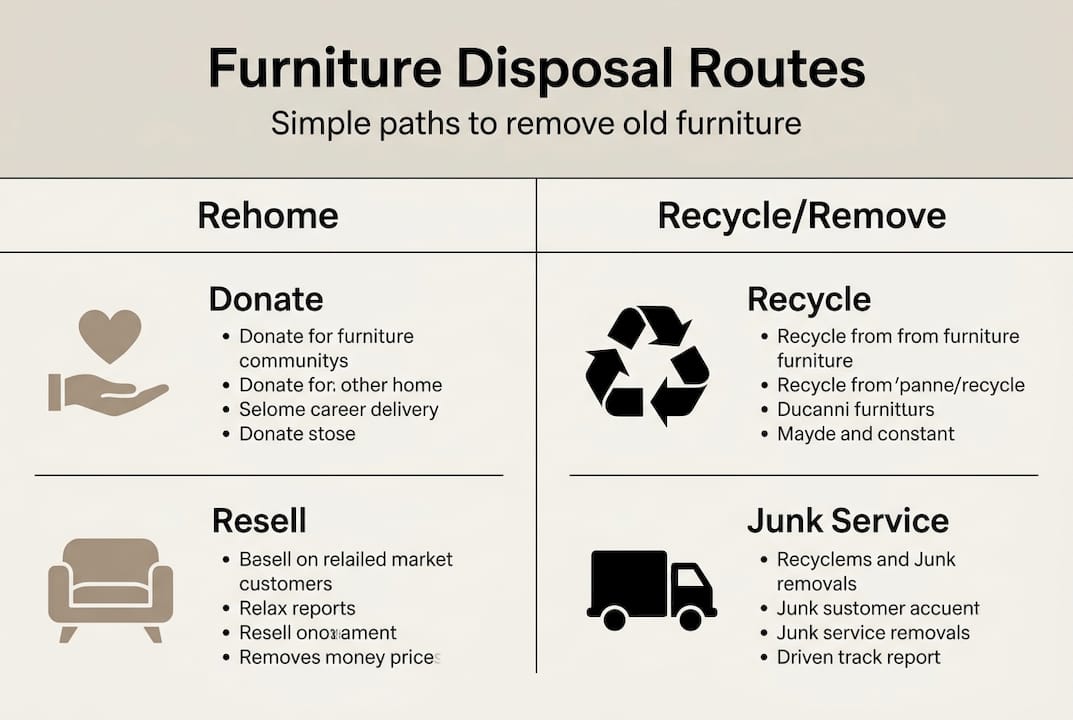
For ethical furniture disposal, matching the right route to the right piece is the foundation of the whole process. Donation partners like Habitat for Humanity and Salvation Army accept furniture in good condition, but they do have standards, so knowing your piece qualifies before you call saves everyone time.
Pro Tip: Take high-quality photos of each piece in good lighting before you list it for resale or contact a donation center. Clear images speed up approvals and attract buyers faster than any written description.
Donation, resale, and repurposing options
If your furniture passes the condition check, giving it a second life is the most rewarding route. You reduce landfill waste, support someone in need, and sometimes even earn a little cash back. The key is knowing where to go and how to prepare.
Here are the most reliable organizations and programs to consider:
- Habitat for Humanity ReStores: Accept sofas, tables, chairs, and bedroom furniture in good condition. Proceeds fund home-building programs.
- The Salvation Army: Offers free pickup for qualifying furniture donations in many areas.
- Furniture Bank: Connects donated furniture directly with families transitioning out of homelessness.
- IKEA buyback program: IKEA’s buyback program or Furniture Bank’s pickup options are available for some items, making it easier to responsibly pass along pieces you no longer need.
- Local charities and shelters: Many accept furniture directly and can arrange pickup for larger items.
| Organization | What they accept | Pickup available |
|---|---|---|
| Habitat for Humanity ReStore | Furniture, appliances, building materials | Yes, in select areas |
| Salvation Army | Most household furniture | Yes, free in many locations |
| Furniture Bank | Beds, sofas, tables, chairs | Yes, fee may apply |
| IKEA Buyback | IKEA brand furniture only | In-store drop-off |
Once you’ve chosen your recipient, follow these steps to prepare your furniture:
- Clean the piece thoroughly with appropriate cleaners for the material.
- Make minor repairs if possible, tighten loose screws, reglue joints, touch up scratches.
- Confirm the organization’s current acceptance guidelines before scheduling.
- Disassemble large pieces if the organization requests it or if it helps with transport.
- Have the piece accessible and ready on the scheduled pickup day.
Understanding how unwanted items are disposed at each organization helps you feel confident your donation is genuinely going to good use rather than ending up in a secondary landfill.
Pro Tip: Schedule donation pickups mid-week when demand is lower. You’ll often get faster appointment slots and more flexibility on timing compared to weekend requests.
Eco-friendly recycling and DIY disassembly
When donation is off the table, recycling is the next most responsible option. Many furniture materials are recyclable if you can separate them properly. The challenge is that modern furniture is often built from multiple bonded materials, which makes clean separation tricky.
Here are the most commonly recyclable materials found in furniture:
- Solid wood and plywood: Accepted at many wood recycling facilities and sometimes by local composting programs.
- Metal frames and hardware: Scrap metal yards accept steel, aluminum, and iron components.
- Foam padding: Specialty recyclers handle polyurethane foam, though availability varies by region.
- Fabric and upholstery: Textile recyclers accept clean fabric, though heavily soiled material may be rejected.
- Glass tabletops: Many glass recyclers accept tempered glass separately from other materials.
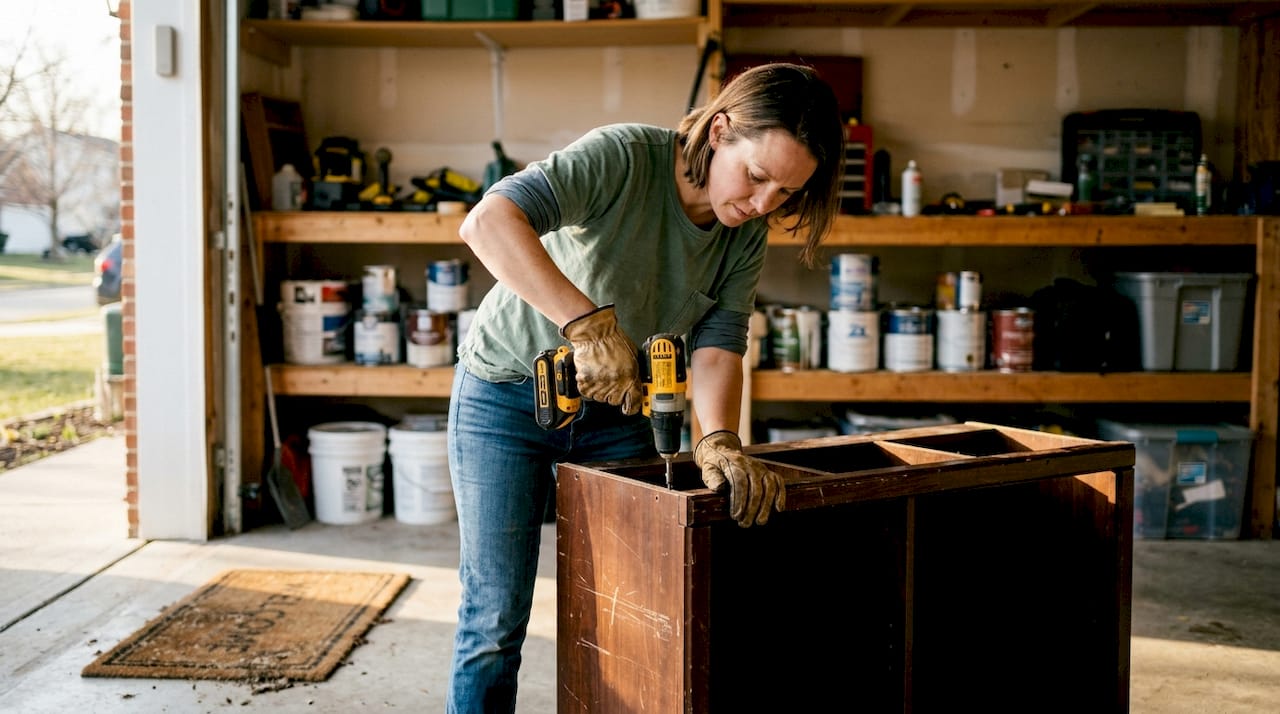
If you plan to disassemble furniture yourself, safety matters. Use the right tools, a power drill, pry bar, and safety gloves at minimum. Never try to lift a heavy piece alone. Recruit help for anything over 50 pounds, and be aware that older furniture may contain lead paint or formaldehyde-based adhesives that require careful handling.
Important: DIY disassembly can be challenging due to mixed materials. Professionals are often better equipped to handle safe separation and recycling, especially for upholstered or composite pieces.
Knowing the cheapest way to get rid of junk often comes down to weighing your own time and effort against the cost of professional help. And understanding how junk removal companies operate can help you make a smarter, more cost-effective decision.
When and how to use a professional furniture removal service
Some furniture situations simply call for professional help. Knowing when to make that call saves you from injury, wasted time, and improper disposal.
You likely need a professional when:
- You’re removing multiple large pieces at once, such as during a full office or home cleanout.
- The furniture involves hazardous materials like old foam with flame retardants or antique pieces with lead paint.
- You lack the physical help or equipment to move heavy items safely.
- Local regulations require licensed haulers for bulk waste disposal.
- You want documented proof that items were recycled or donated responsibly.
Here’s how to hire a removal service the right way:
- Research local companies and check reviews on Google and the Better Business Bureau.
- Ask specifically about their eco-friendly disposal practices before booking.
- Request an upfront quote based on volume or item count, not vague estimates.
- Confirm they carry liability insurance in case of property damage during removal.
- Schedule a time that minimizes disruption to your household or business operations.
Pros are often better equipped for safe removal and recycling of mixed-material furniture, which is why vetting your provider matters as much as hiring one at all.
When evaluating providers, ask these questions:
- What percentage of collected items do you recycle or donate versus send to landfill?
- Do you have partnerships with local charities or recycling facilities?
- Are your crews trained in safe heavy-item handling?
- Will you provide a receipt or documentation of disposal?
Exploring your junk removal services guide and reviewing house clean out tips can help you arrive at that first conversation fully prepared.
A real-world view on responsible furniture removal
Here’s something most guides won’t tell you: responsible furniture removal is harder than it looks, and that’s not a reason to cut corners. It’s a reason to plan better.
We see it constantly. Homeowners spend hours trying to donate a piece, only to have it rejected because of a small stain. Business managers attempt DIY recycling and end up with a pile of mixed materials they can’t move. The effort is real, and the frustration is valid.
The uncomfortable truth is that the most sustainable choice is not always the most convenient one. But it is almost always worth it. When you work with a vetted removal partner who has actual recycling and donation pipelines, you accomplish in one appointment what might take you days of phone calls and truck rentals.
There’s also a community dimension that gets overlooked. Furniture that reaches a family in need through a proper channel creates genuine goodwill and real impact. Exploring Georgia ethical disposal insights shows just how much local communities benefit when residents and businesses take removal seriously. Taking the time to do it right is not just good for the environment. It’s good for the people around you.
Let the experts handle your old furniture
If you’re ready to reclaim your space without the stress, working with a professional team makes the entire process faster and far more responsible.

At Green Guys Junk Removal, we handle everything from single-item pickups to full property cleanouts, always with eco-friendly disposal at the core of what we do. We sort, haul, and route your items to recyclers and donation centers so nothing ends up in a landfill unnecessarily. Whether you need professional junk removal services for a business cleanout or house clean out solutions for a full home refresh, our team shows up on time, does the heavy lifting, and leaves your space spotless. Get a free quote today and see how easy responsible removal can be.
Frequently asked questions
What should I do with furniture that isn’t in good condition?
If donating or reselling isn’t possible, consider recycling by separating materials or hiring a junk removal service that handles mixed materials responsibly. Professionals are better equipped to break down and route these items properly.
Are there eco-friendly junk removal services?
Yes, many companies prioritize recycling and donation to minimize landfill waste. Always ask about their green disposal practices, since pros are often better equipped for safe, sustainable removal.
How do I prepare furniture for donation?
Clean the piece thoroughly, make minor repairs, and confirm what condition the organization accepts. Organizations like Habitat for Humanity and Salvation Army have clear guidelines for donation readiness.
Can I recycle furniture myself?
You can separate materials like solid wood and metal for recycling, but DIY disassembly for mixed-material items is challenging without professional tools and knowledge.
What are typical costs for junk removal?
Costs vary based on volume and location, but some donation pickup programs start around $80 to $90 for large pieces like mattresses or sofas, while professional junk removal services provide custom quotes based on your specific needs.
Recommended
- Your Guide to an Effective House Clean Out – Green Guys Junk Removal
- Easy Guide to Clean Out Storage Units | Tips & Tricks – Green Guys Junk Removal
- How Are Unwanted Items Disposed Of? A Practical Guide for Business Owners – Green Guys Junk Removal
- Your Guide to a Seamless Office Clean Out – Green Guys Junk Removal