

How Much Does Appliance Removal Cost? (Simple, No‑Jargon Guide)
Reading time: ~6–7 minutes • Tone: conversational • Goal: help you price a pickup and book with confidence.
Quick Answer
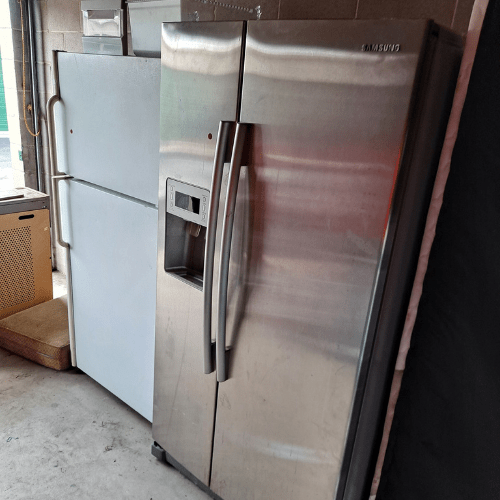
Most appliance removal jobs cost about $60–$180 per unit. Prices can be lower for easy, ground‑floor items and higher for refrigerators/freezers (because of refrigerant handling), stairs, or long carries. If you have several items, many companies switch to volume‑based pricing (you pay for the space used in the truck), which can lower your per‑item cost.
“If it’s one dishwasher near the garage door, expect the low end. If it’s a basement fridge up tight stairs, it’ll land higher.”
To compare apples to apples, always share photos and access notes (stairs, elevator, gate codes). A good company will turn that into a clean, written estimate.
How Pricing Works (Single Item vs. Full Load)
Per‑item pricing is common when you only have one or two pieces. A washer, dryer, or dishwasher is usually faster and cheaper than a large refrigerator or freezer that needs refrigerant recovery. National trackers like Angi’s appliance removal cost guide and HomeAdvisor’s junk removal averages show most single‑item removals landing in the low‑to‑mid hundreds depending on your city and job details.
When you have multiple appliances (or other junk), many providers switch to volume‑based pricing—you pay for how much truck space you use, with labor and disposal included. To see how that model works, check how 1‑800‑GOT‑JUNK explains volume pricing and their current load‑size examples. With volume pricing, each extra item can bump the total a bit—but the per‑item average often drops compared to ordering separate pickups.
“Think of the truck like a closet. The more space you fill, the more it costs. But once the crew is there, adding a small item is usually cheaper than calling them back next week.”
Real‑World Ranges (By Appliance Type)
Below are typical ranges you’ll see across the U.S. Your market may vary based on labor rates and disposal fees.
- Refrigerator / Freezer: ~$90–$250+ per unit (contains refrigerant; heavier; sometimes tight access)
- Washer or Dryer: ~$70–$160 each (pair pricing can be better)
- Dishwasher: ~$60–$140 (often quicker, if disconnected)
- Range / Oven / Stove: ~$70–$160 (gas disconnects may require a pro before removal)
- Microwave (countertop): ~$50–$90 (often added onto a larger pickup)
- Built‑ins (over‑the‑range, wall ovens): Usually higher—may need unmounting or light demo
You can also sanity‑check your numbers with a per‑appliance estimator like Homewyse to see how labor, time, and access affect pricing.
What Changes Your Quote (The Big 5)
- Item type & handling: Refrigerators, freezers, and A/C units require refrigerant capture. That adds time, training, and sometimes facility fees. Learn why this matters at the EPA’s Responsible Appliance Disposal basics.
- Access & distance: Stairs, narrow hallways, and long carries raise labor time. Ground‑floor, near‑door items cost less.
- Local disposal & recycling fees: Cities and counties set different tipping and recycling rates. Metal‑heavy loads can be cheaper if your hauler sorts and scraps.
- Timing: Same‑day or weekend windows can cost more. Flexible windows help crews stack routes and keep prices fair.
- Add‑on services: Unhooking water/gas lines, capping, or light demo will add labor. Many haulers will remove a standard appliance once it’s disconnected.
“Two jobs can look the same in photos. Stairs and tight turns make the difference. Tell us the path from the door to the truck and we can price it right.”
Retail Haul‑Away vs. Junk Removal vs. DIY
Retail haul‑away (when you buy a new appliance) is a helpful benchmark. For example, Best Buy’s standalone haul‑away is often posted as $199.99 for up to two large items in many areas, while haul‑away with delivery can be around $59.99 with a new purchase. Retailers usually won’t take extra junk or do complex carries, but the price can be great if you’re swapping like‑for‑like.
Junk removal crews handle more scenarios: basement fridges, stairs, extra boxes, and add‑on items (like a sofa, shelves, or e‑waste). If you have a mix of items, a junk removal visit often beats retail haul‑away for convenience and total value.
DIY looks cheap until you add it up: truck rental, fuel, dump fees, straps, and several hours of your time. If your city requires an appointment for appliance drop‑off or has weight minimums, DIY can get tricky fast.
“By the third dump run, DIY doesn’t feel free. One truck and a two‑person crew is just faster.”
How to Save Money (and Get a Faster Pickup)
- Bundle items. If the truck is already there, adding a couple of boxes, a chair, or a microwave usually costs less than a second trip.
- Stage near the exit. If safe to do so, move cleared items closer to a main door to reduce carry time.
- Disconnect in advance. Unplug, unhook water lines, and clear pathways (turn off gas at the shutoff; hire a pro plumber/HVAC for anything complex).
- Share access details. Stairs, elevators, gate codes, “no parking before 9am”—these help the crew quote accurately and arrive ready.
- Ask about recycling and donations. Some providers sort metal and e‑waste, and donate working items. It’s greener and can offset disposal costs.
Why Prices Vary by City (and Even by Neighborhood)
Labor rates, insurance, tolls, and tipping fees (what facilities charge to accept material) vary a lot. Urban cores tend to have higher costs due to parking and access. Suburbs may be cheaper and easier to route. Companies also build routes for density—stacking jobs near each other—which keeps fuel and time down. If you’re flexible on pickup time, you can often ride along a dense route and get a better window.
“Tell us you’re flexible and we’ll try to fit you into a tight route. That saves us time—and it often saves you money.”
What a Fair Quote Looks Like
A fair estimate should include:
- What’s included (labor, loading, disposal)
- Any special fees (refrigerant, stairs, long carries)
- Where the price could change (if items multiply or access changes)
- Window and crew size (so you can plan your day)
For multi‑item jobs, you’ll often see volume tiers (e.g., 1/8, 1/4, 1/2 truck). Again, the per‑item cost usually falls as the load gets bigger.
Example Scenarios (So You Can Ballpark It)
- Single dishwasher at the garage door: Quick carry → low range.
- Basement fridge up one flight: Extra labor + refrigerant handling → mid‑high range.
- Washer + dryer + a few boxes: Volume pricing might beat two separate “per‑item” pickups → better per‑item value.
- Move‑out bundle (fridge, range, microwave, couch): Full or half‑truck tier → best per‑item value, one clean sweep.
These are examples—send photos and access notes to lock in your number.
Eco‑Friendly Disposal (and Why It Matters)
Well‑run crews sort as they load: metal to recycling, working items to donation, and mixed waste to disposal. This helps the environment and keeps costs honest. Proper handling of refrigerants is required by law in many situations—see the EPA’s RAD program for why fridges and freezers have extra steps. If environmental impact matters to you, ask the hauler how they handle metals, e‑waste, and white goods.
“Keeping appliances out of the landfill isn’t just the right thing—it can lower tipping fees and keep quotes competitive.”
What You’ll Likely Pay
- Single standard appliance: about $60–$180 in many markets
- Refrigerator / freezer: often $90–$250+ (refrigerant + weight)
- Two+ items or mixed junk: volume pricing; per‑item cost usually drops
If you’re on the fence between retail haul‑away and a junk removal crew, compare the total you need removed and the access. Retail is great for a straight swap. Junk removal shines when there’s extra stuff or tough access.
Ready for a Fast, Fair Quote?
Text a couple of photos and your zip code. Tell us where the item sits (garage, curb, basement) and if there are stairs. We’ll price it clearly, give you a window, and handle the heavy lifting—today or tomorrow in most areas.
Helpful links to explore pricing and policies:
- Angi: national junk/appliance cost ranges
- HomeAdvisor: junk removal price factors
- 1‑800‑GOT‑JUNK: how volume pricing works
- Best Buy: standalone haul‑away vs. with delivery
- EPA: Responsible Appliance Disposal (RAD) basics
- Homewyse: per‑appliance removal estimator
COMPANY: GREEN GUYS JUNK REMOVAL
ADDRESS: 6063 PEACHTREE PARKWAY, SUITE 101B, PEACHTREE CORNERS, GA 30092
PHONE#: 470-519-9151
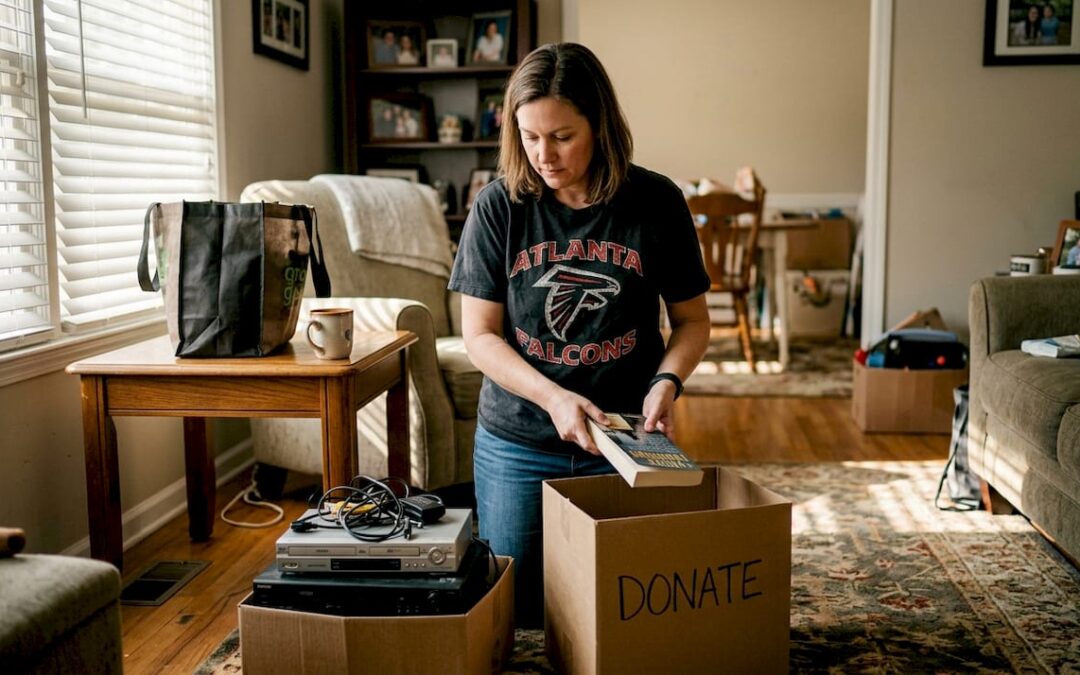
Eco-friendly Atlanta home decluttering checklist 2026
Use this room-by-room eco-friendly decluttering checklist built for suburban Atlanta homeowners. Get proven methods, local resources, and pro tips to clear clutter responsibly.
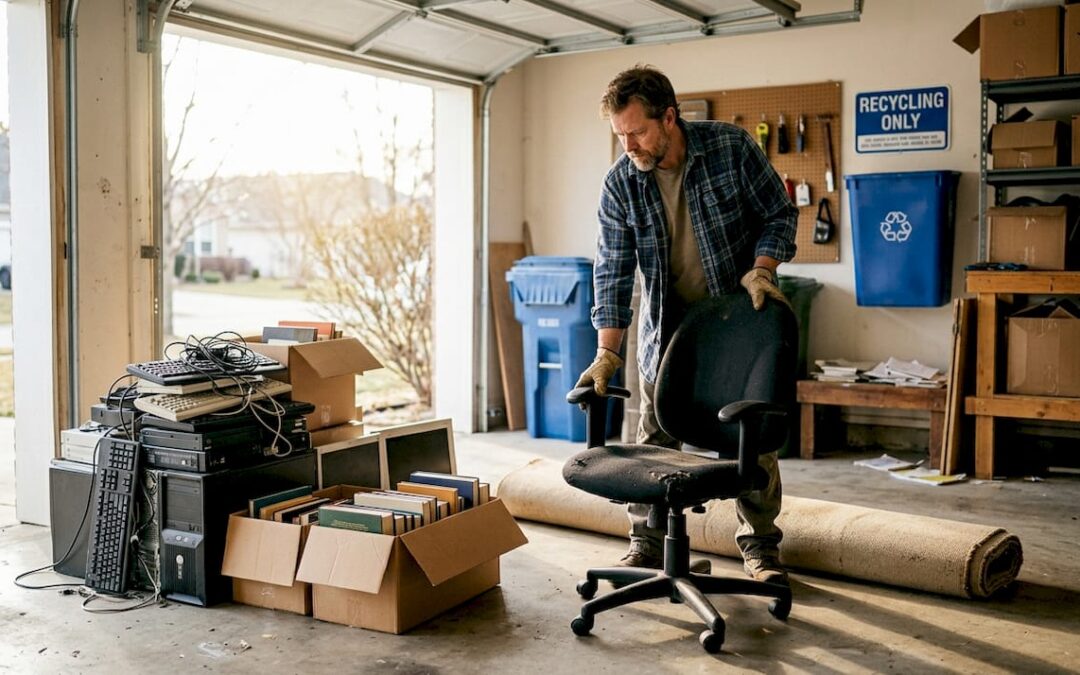
Minimizing Junk Removal Waste Saves Money and the Planet
Learn how minimizing junk removal waste cuts costs and reduces landfill emissions. Discover how eco-friendly services divert up to 80% of materials from landfills.

How to Remove Old Furniture Responsibly and Easily
Learn how to remove old furniture responsibly with donation, recycling, and eco-friendly junk removal options. A practical guide for homeowners and businesses.